CAMP GOLF The Official Homepage of Camping/Scouting-Related Golf For Adult Leaders
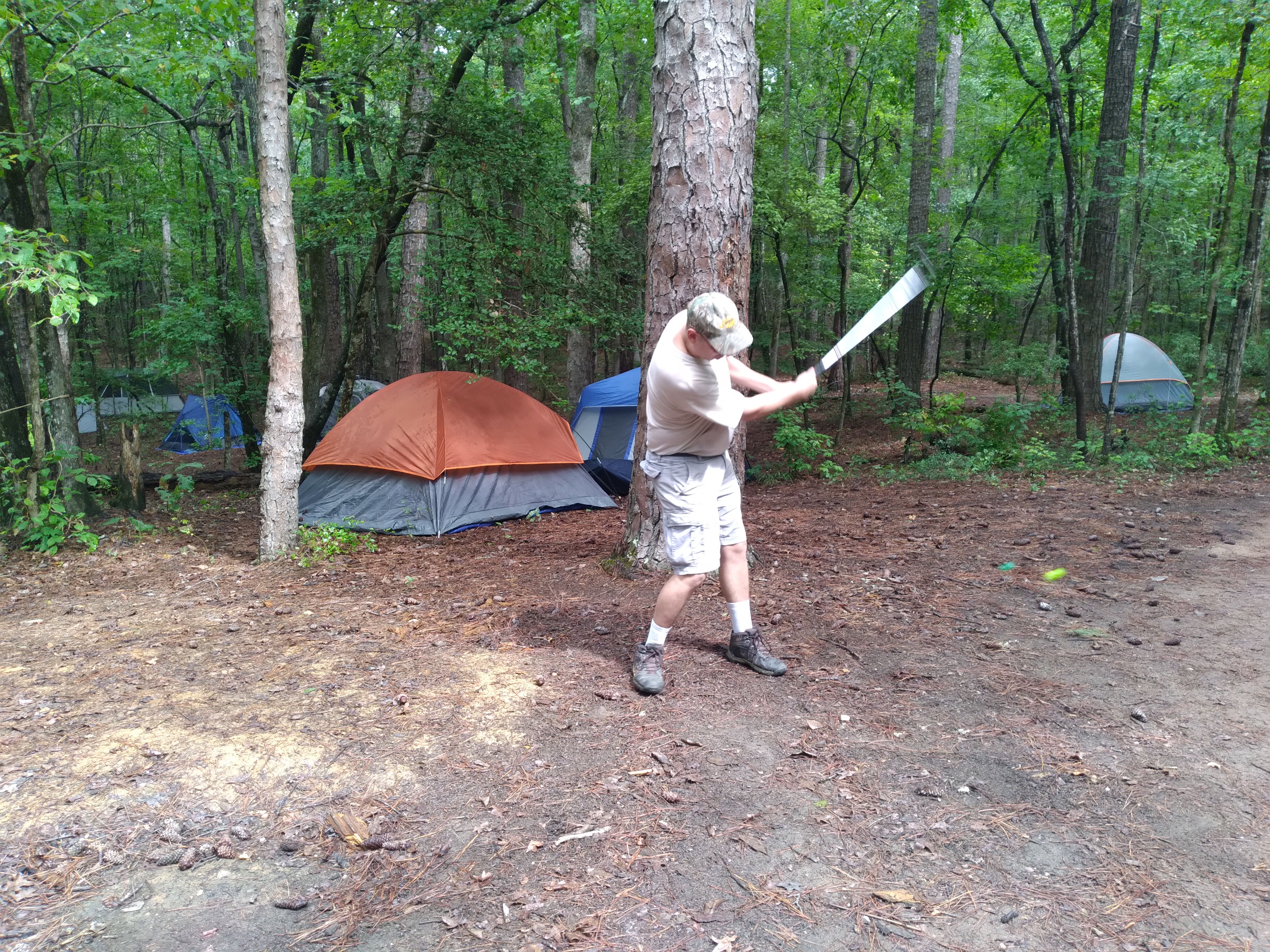
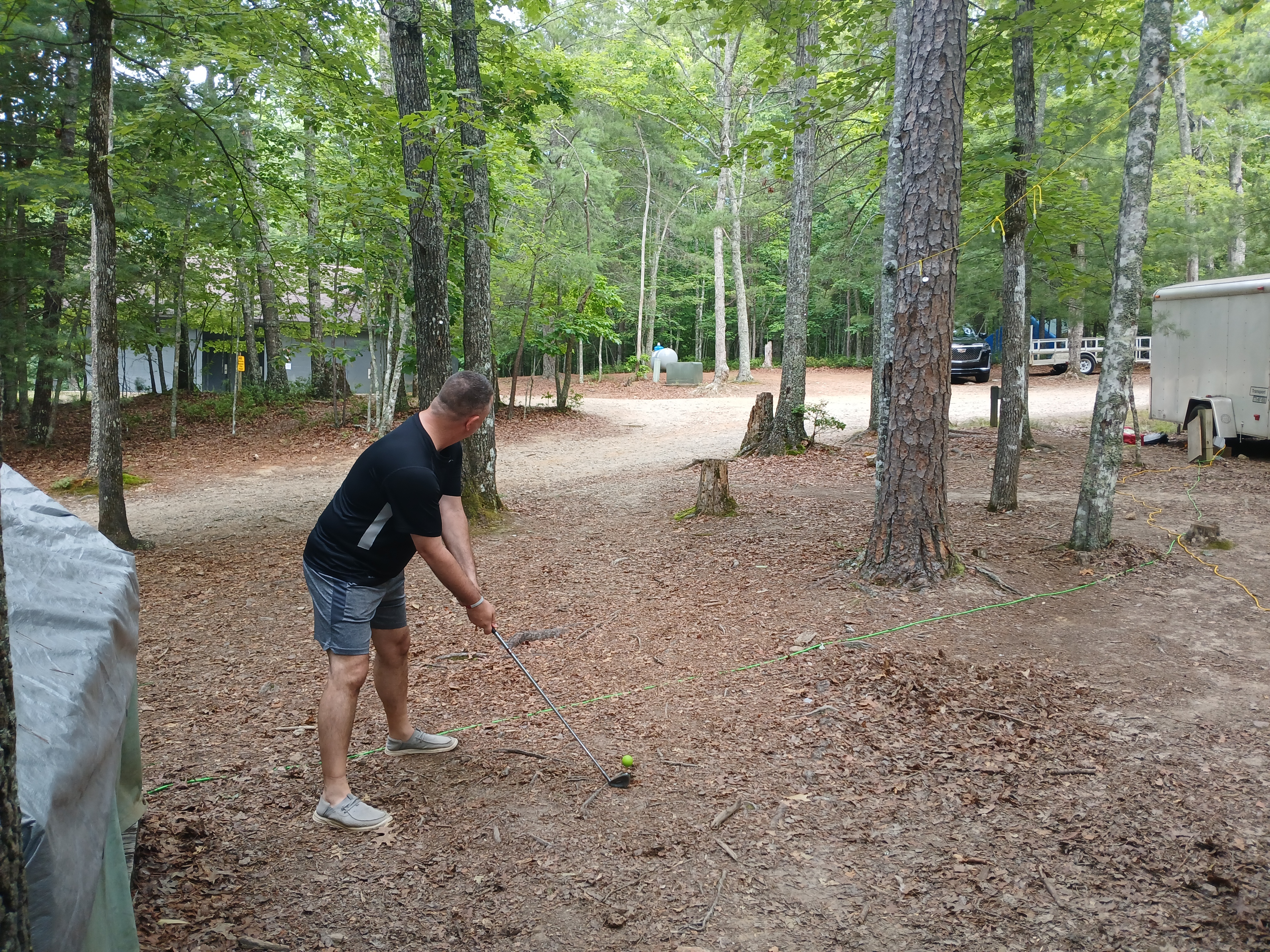
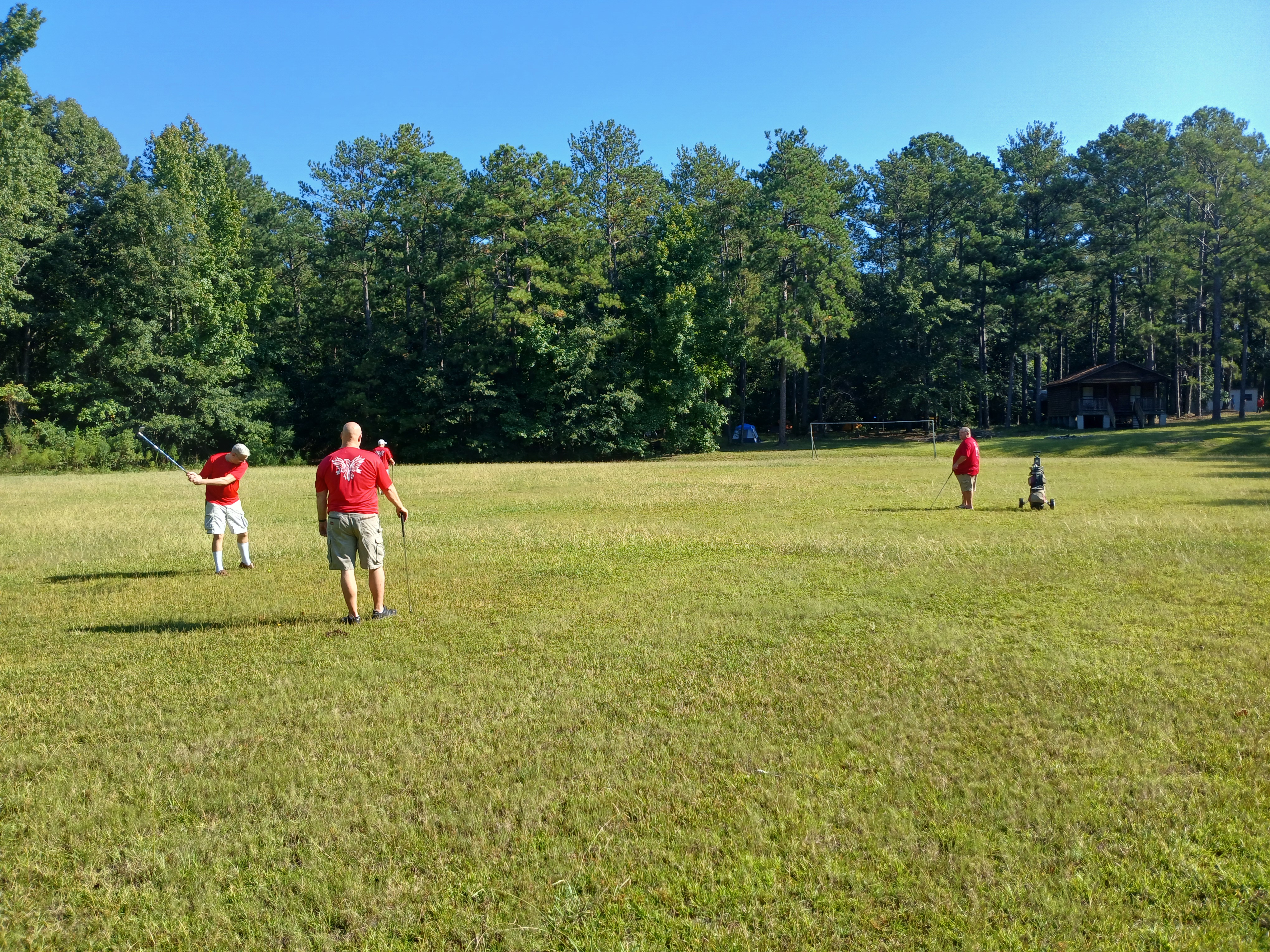
History: Around 2011 I began taking regular golf balls and a few clubs to scout camp. I would set up a short course around the camp site; but due to the risk of injury, the courses were extremely limited - requiring short shots staying close to the ground and avoiding any possible scout injury. I continued with these limitations until, around 2015, I bought a bucket of colored foam practice balls at Wal-Mart - seeing the potential for SAFE camp golf. I began implementing the new improved camp golf in our troop and getting all the adults hooked on the game. As the resident “course designer” one of the my first tasks at camp is to design a 6-9 hole course for each new campsite we camp at. I also initially brought several clubs and tees, but eventually our scoutmaster happened across a yard sale where he acquired a donated golf bag with clubs, including a foldable pull cart. The cart with clubs became an integral part of the scout camp trailer. Along the way we also acquired some left-handed clubs.
Following is a guide to setting up a Camp Golf program with applicable rules of the game:
Course Design:
- Either one person or multiple can design the course after camp is set up. I usually design the courses for my troop and it takes about 15 minutes. It helps to have lots of points of interest in camp!
- 6-9 holes is generally desirable. With more than 4 players, more than 6 holes can take a lot of time.
- Note that “holes” almost exclusively are NOT actual holes at all, simply places to be and conditions to be met.
- Use available terrain and camp structures unique to each site and that provide variety. The following are typical holes:
-- Pass between two specific trees - either direction.
-- Pass through a specific aperture (e.g. under a fence rail; under a bench of a picnic table; between two supports). Note that on a pass-through hole the standard is to allow “either direction” to avoid an extra “penalty stroke” to get the ball back to the other side of the hole. There may, however, be situations where it is appropriate to specify the direction. Unless otherwise defined, completion of a pass-through is defined as the ball being completely past a line connecting the edges of the hole uprights.
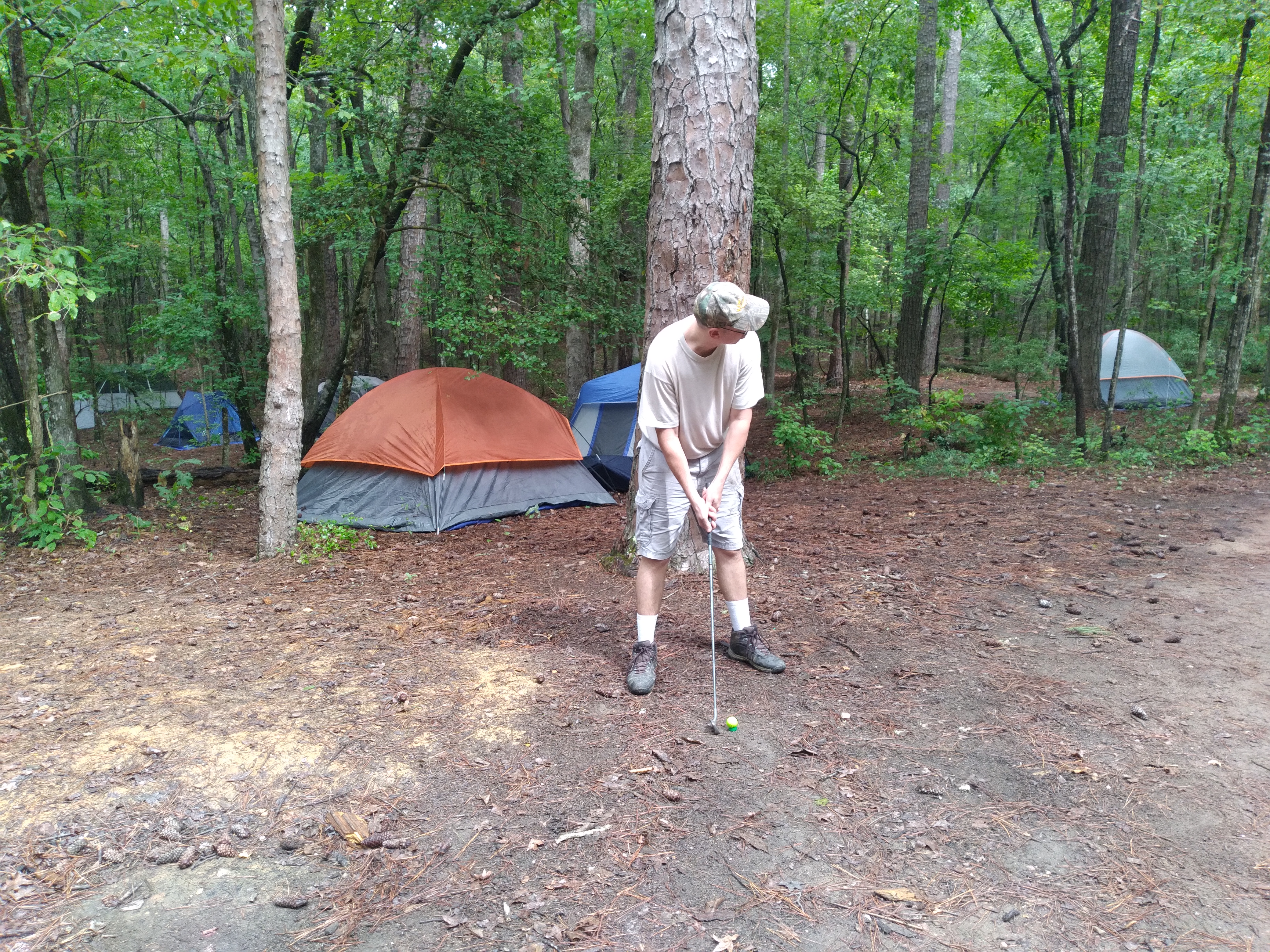
-- Hit a specific tent. (Be sure to specify whether guy lines and tarps are considered part of the tent.)
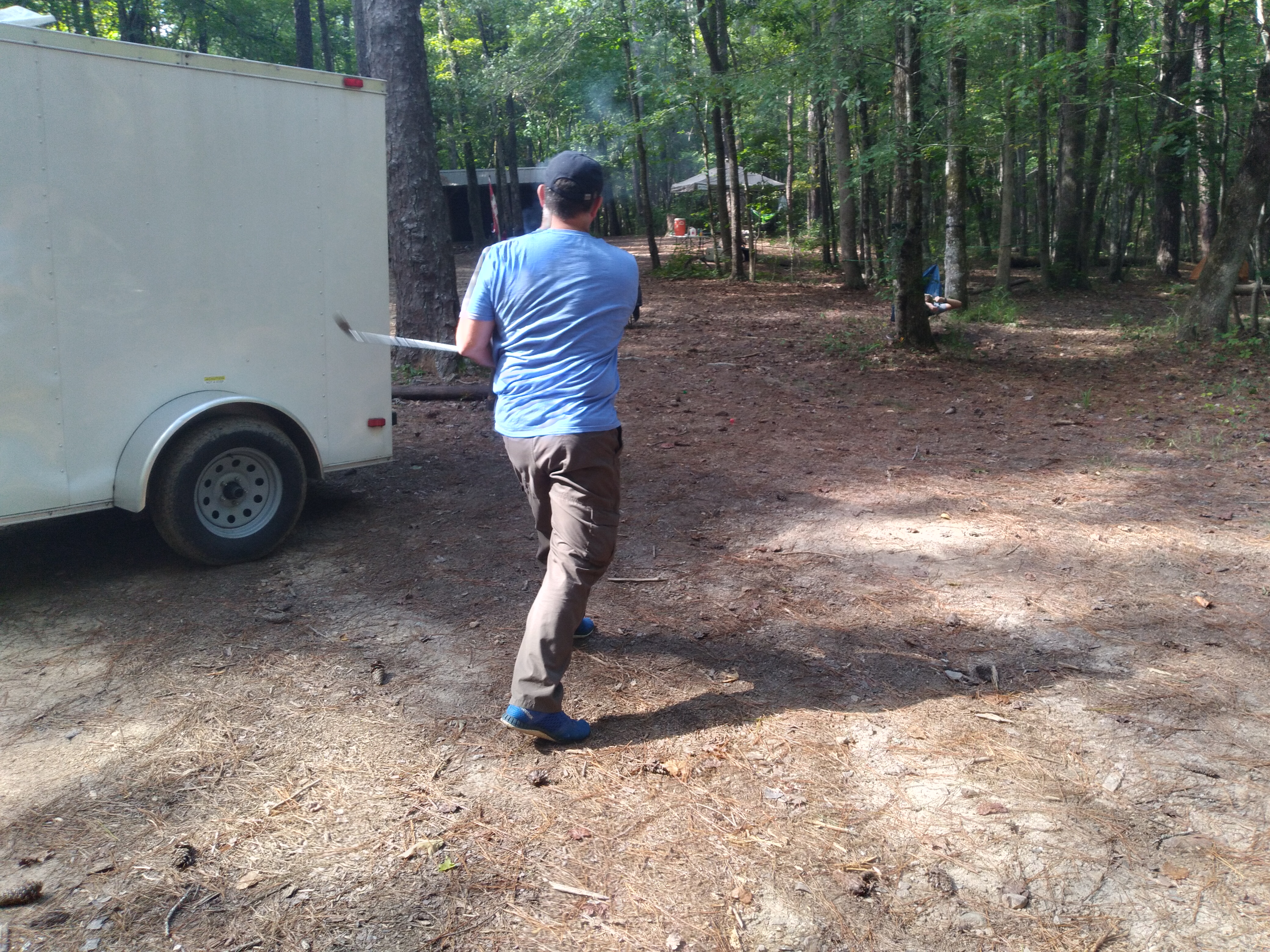
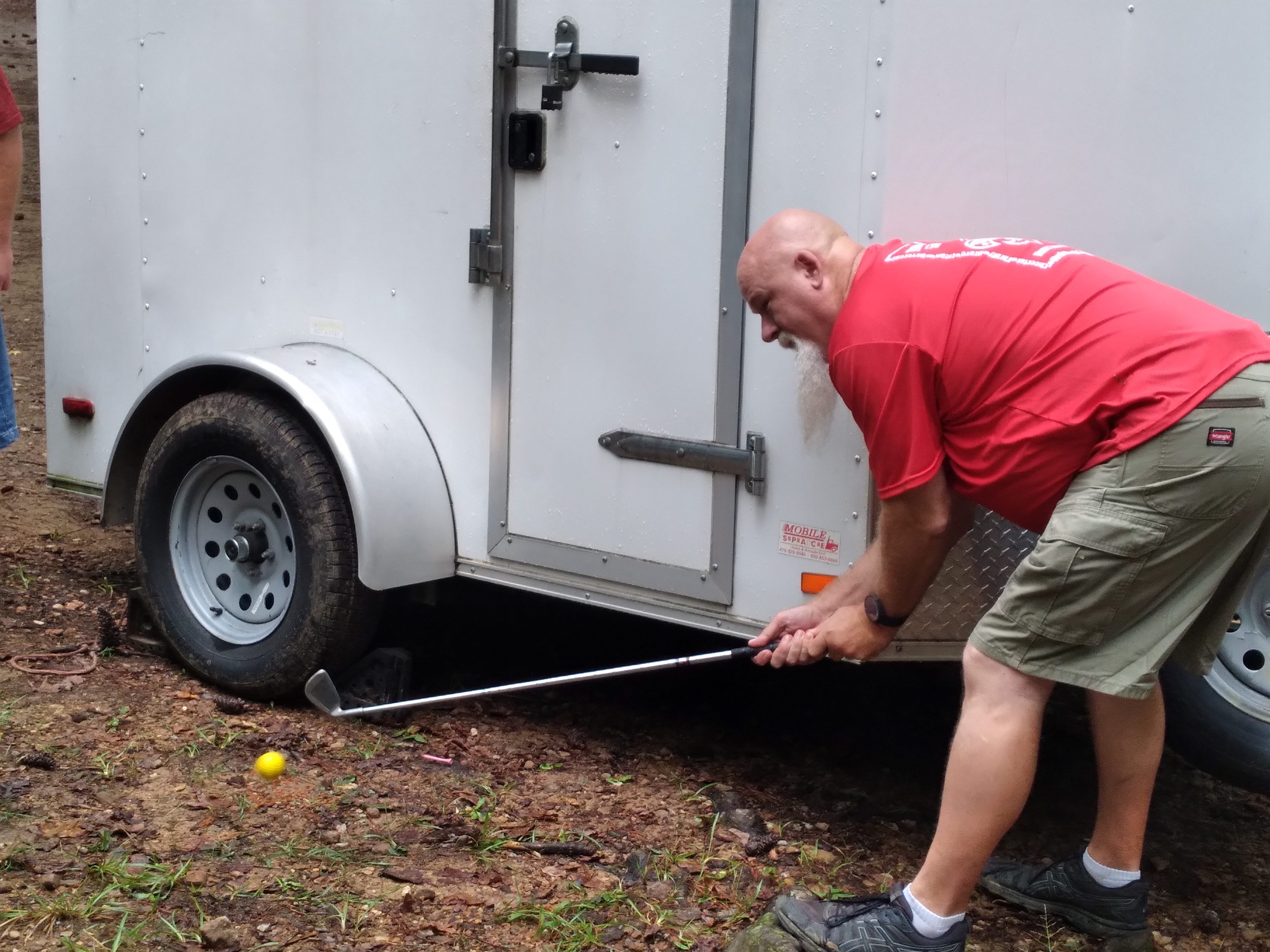
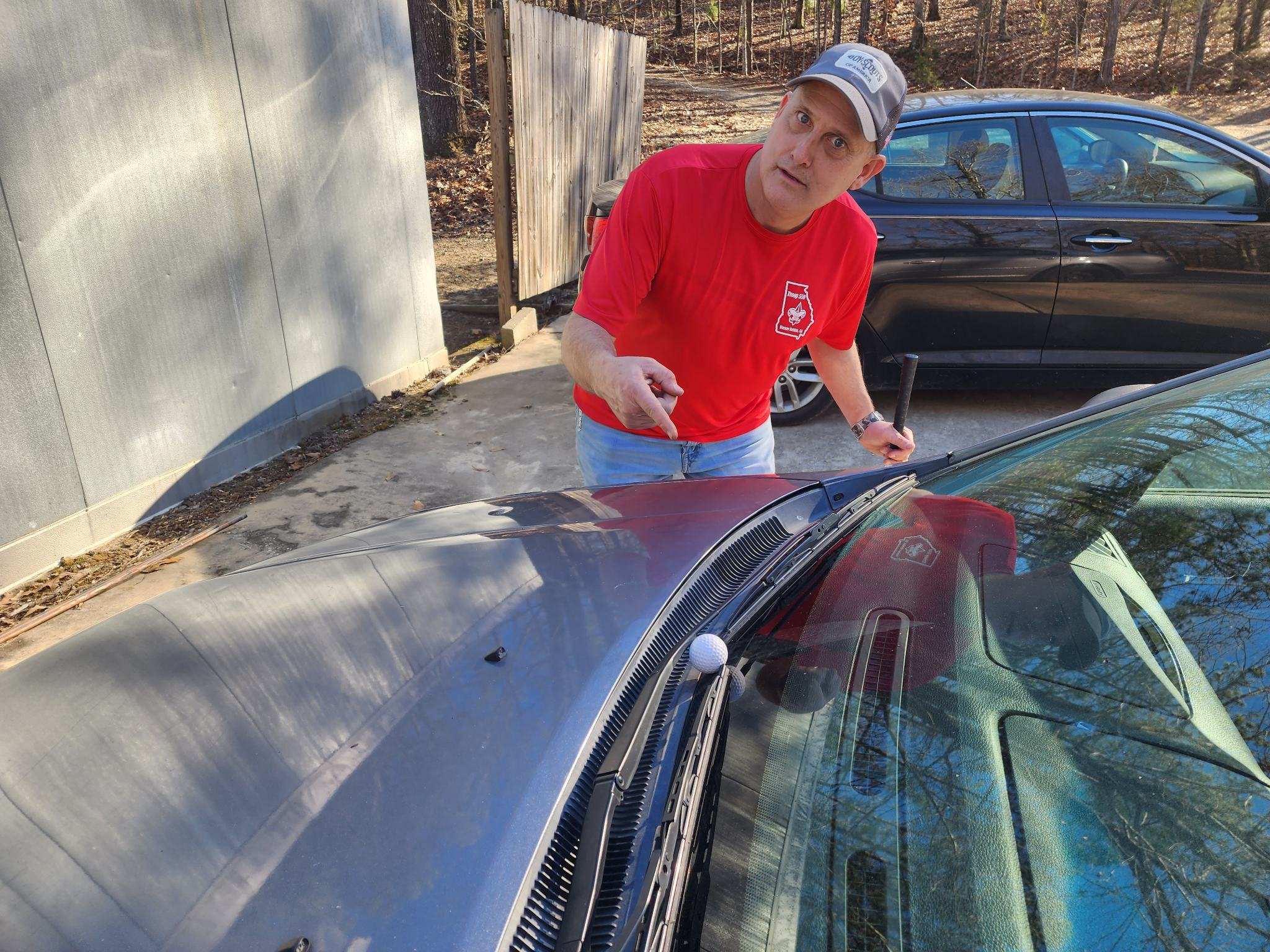
-- Hit the scout trailer or other vehicle. (Specify whether tires and hitches and underneath are considered part of the trailer.)
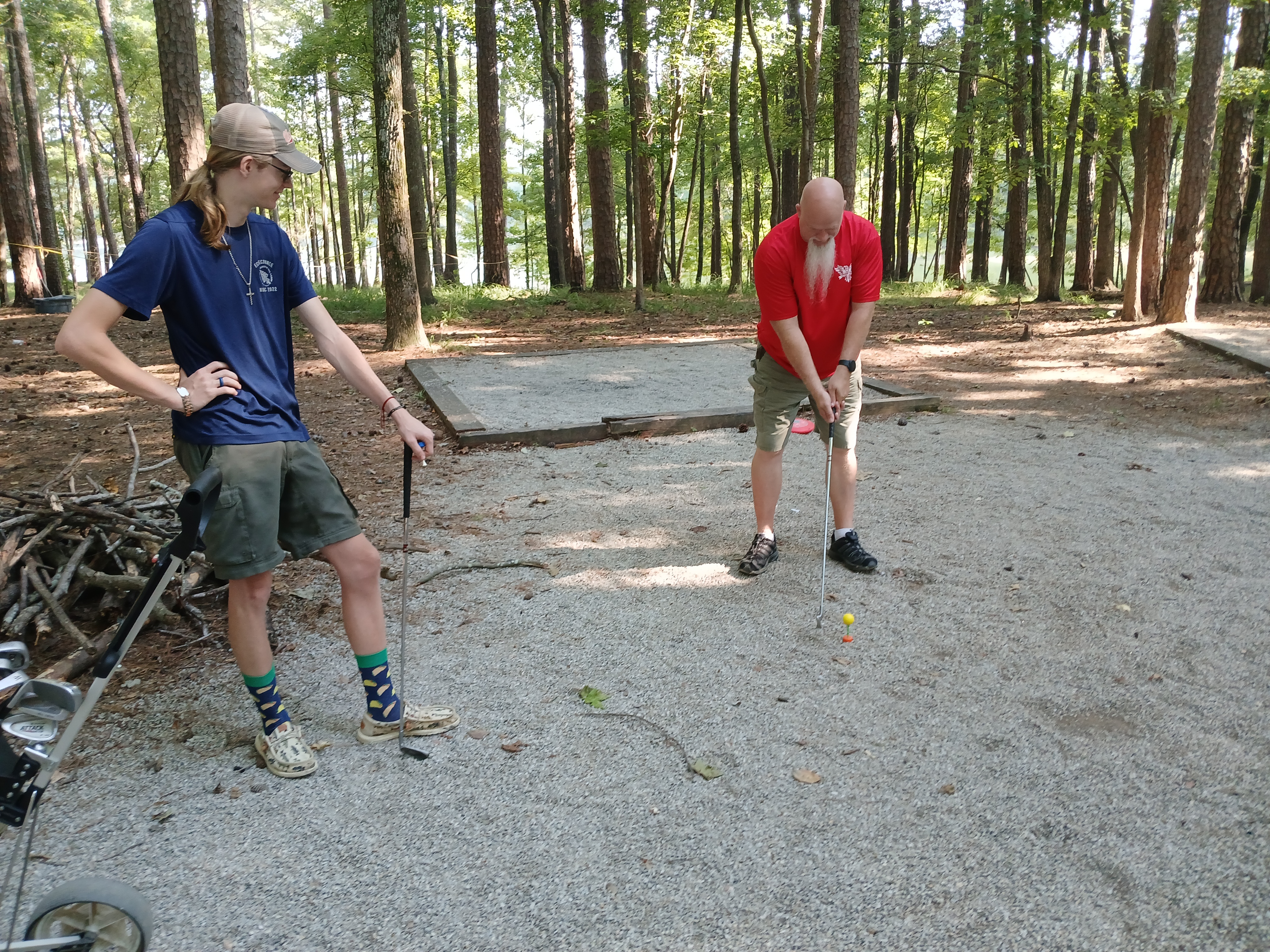
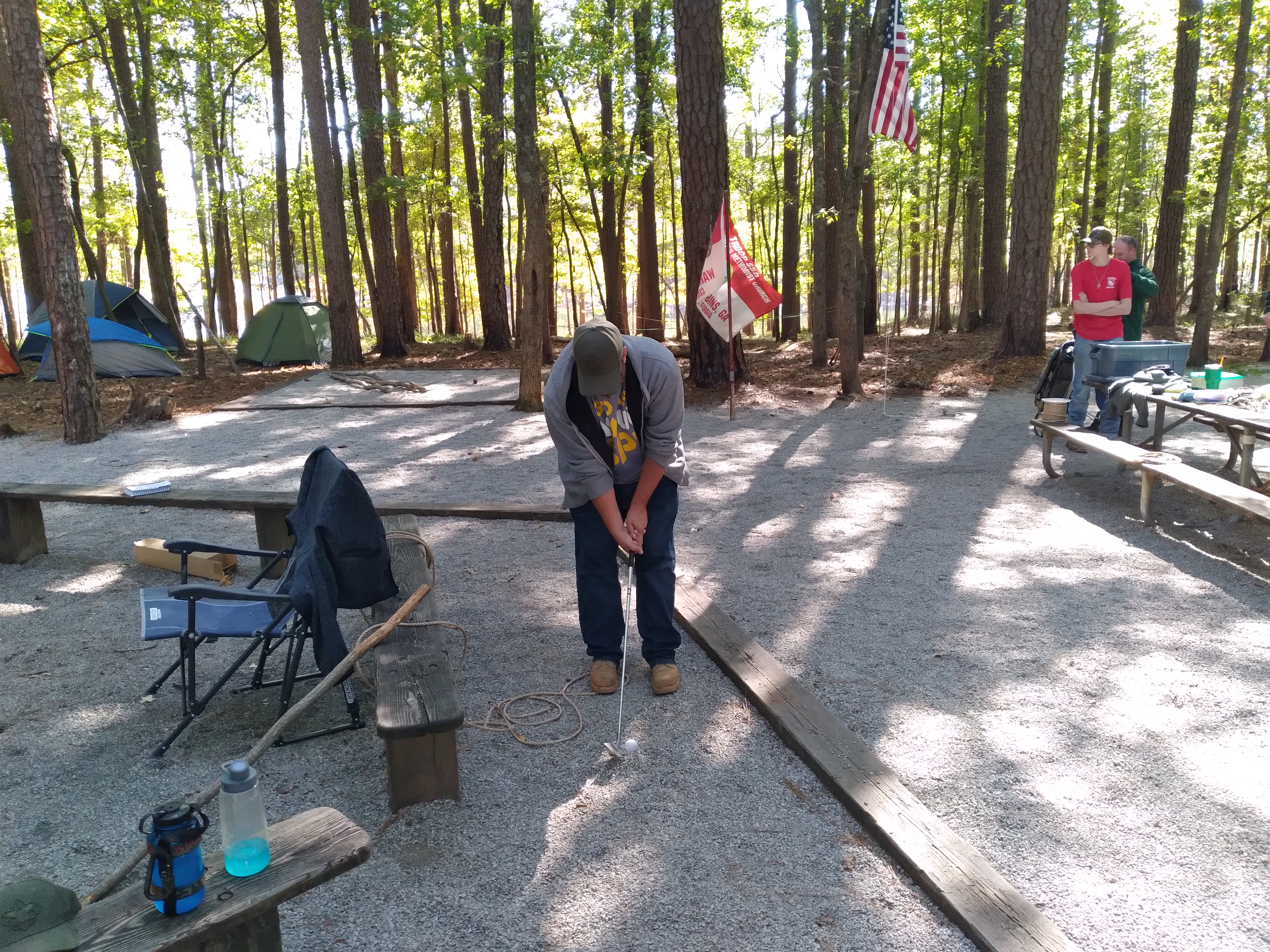
-- Hit a specific side of a building. Specify whether certain edge trim or other questionable elements (such as windows) are inlcuded.
-- Hit the roof of a specific structure. (Be aware of gutters that may result in lost balls.)
-- Hit a specific tree or telephone pole (be sure to specify how roots or branches apply).
– Hit one of the ubiquitous green electrical boxes.
-- Come to rest in the fire pit (no fire, of course) which has well-defined boundaries. Also gaga ball pit, etc.
-- Come to rest on a pavilion slab or other flat surface.
-- Come to rest within a certain EZ-up (sight along the legs to determine in or out).
-- Come to rest on the floor of a wooden structure (e.g. adirondack). Or hit the back wall... or both.
-- Sequential accomplishment (e.g. pass between two specific trees, then hit a certain tent to complete the hole.)
-- Putting holes: if you have a pavilion or other large slab of concrete, you can create a “pass through” or “come to rest” putting hole.
- Try to make most holes par 3s, where it’s possible but unlikely to get a hole in one, and you’re likely to need your second shot to get close enough for a short chip to complete the hole. If you have a large open area you can also make a par 5 that might require at least two “fairway shots” before having a possible completion. Most shots with the foam balls will be 50-75 yards max.
- Chose a tee box location near the previous hole to make the course a closed loop, like real courses. Tee locations are usually “behind this line; between these trees.”
Equipment:
- Balls should be the full foam balls, preferably colored, e.g. from Wal-Mart or wherever. Hard plastic practice balls, generally hollow, are not acceptable for scout safety. The foam balls are safe for scouts, even with full swings directly into a scout (however, use discretion and avoid full-swing shots with scouts close by.) Walmart Practice Ball Link
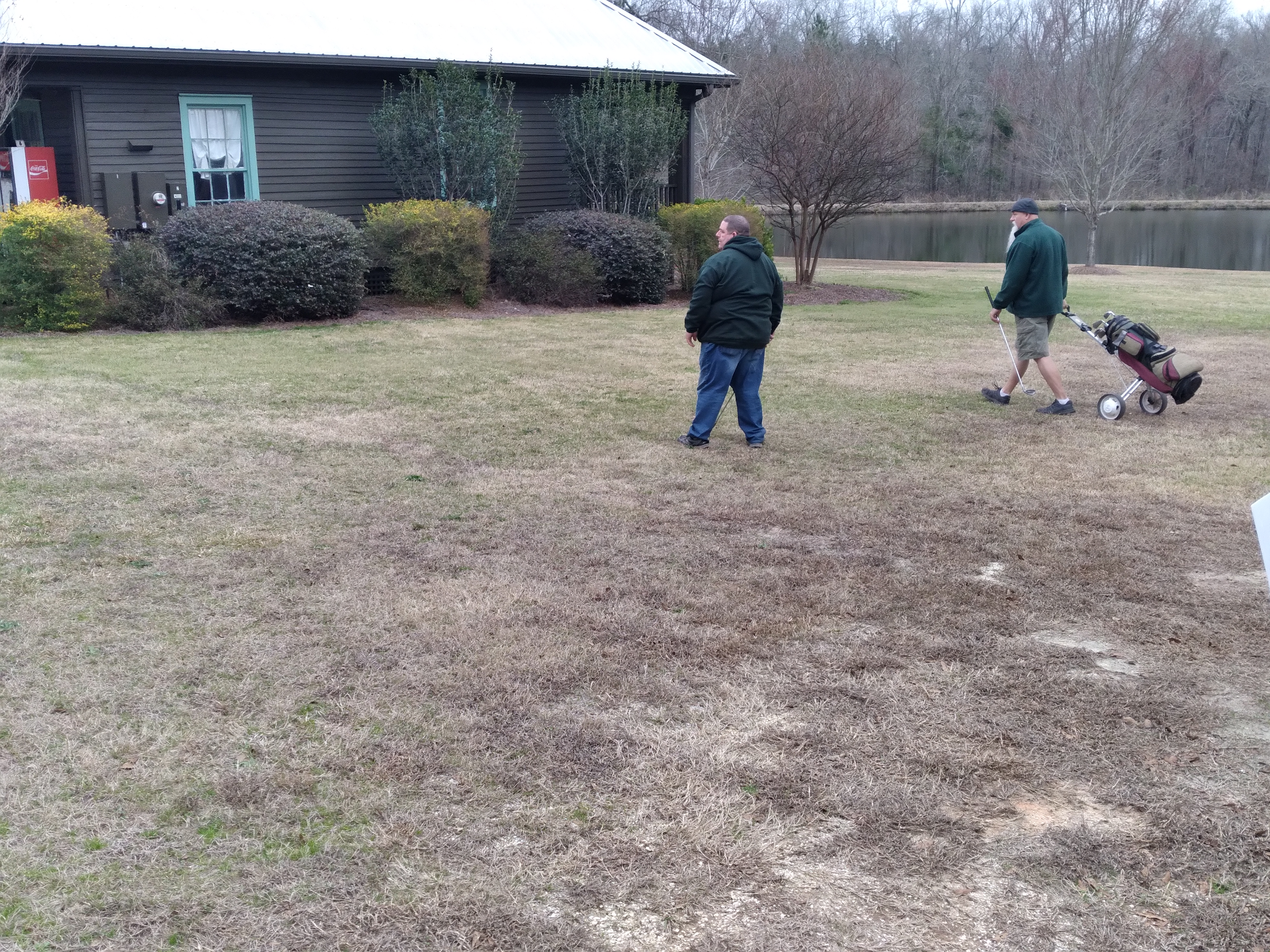
- Clubs: Drivers are fairly useless - possibly a 3 wood or hybrid may be usefull; but having a range of irons is desirable (at least a 3 or 4 iron, a 6 or 7, an 8 or 9, and a pitching wedge or gap wedge)is fine, and a sand wedge and putter is highly desirable. Club quality is irrelevant for hitting the foam balls, so garage sale or Goodwill clubs are just fine. Don’t forget your lefties, also. A small golf bag is desirable to caddy the clubs around. If not available, each person can carry one or two clubs and pass them around as needed. It is also acceptable to recruit a responsible scout to caddy the clubs around, as long as it's not diverting them from scout activities.
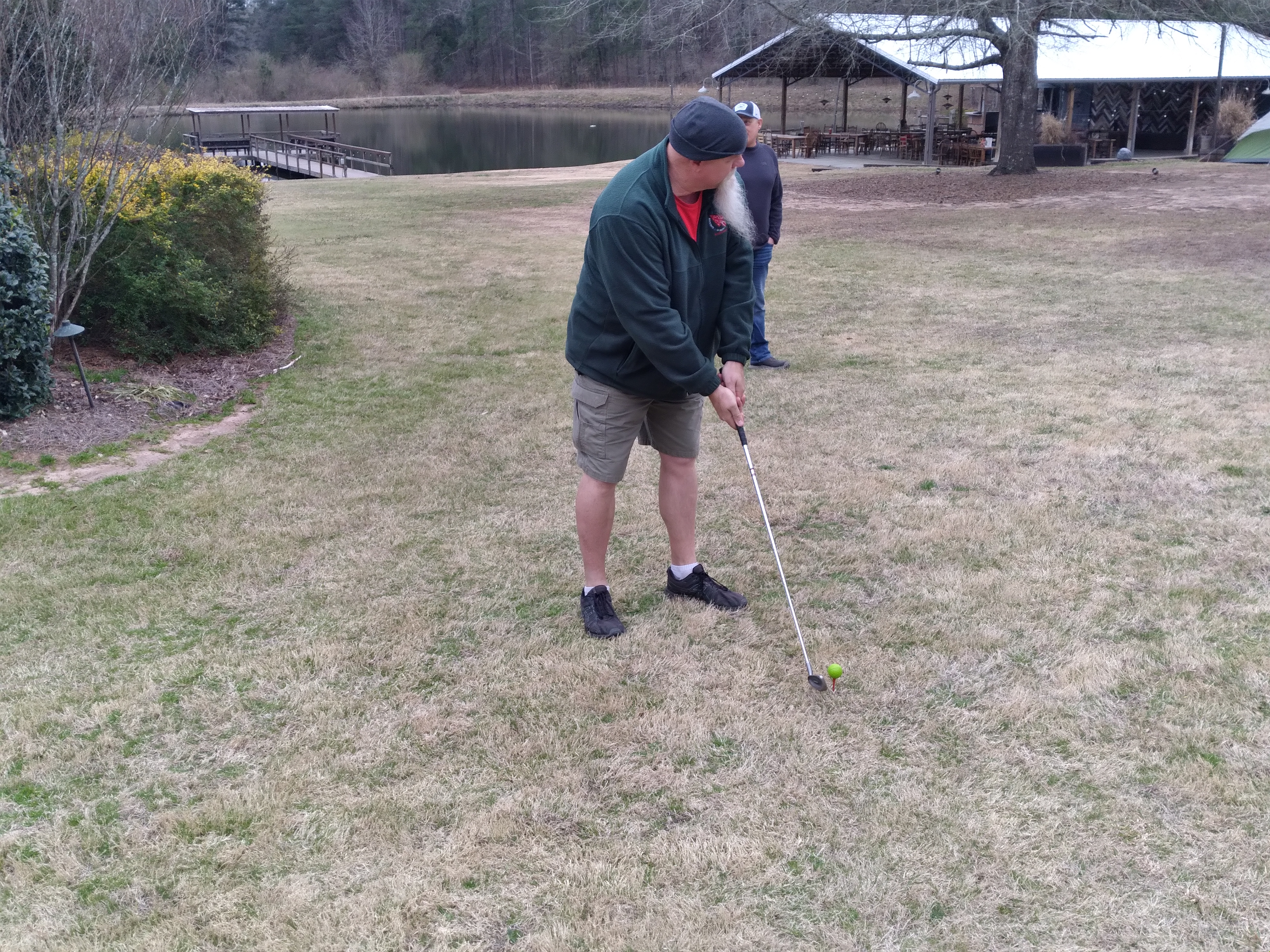
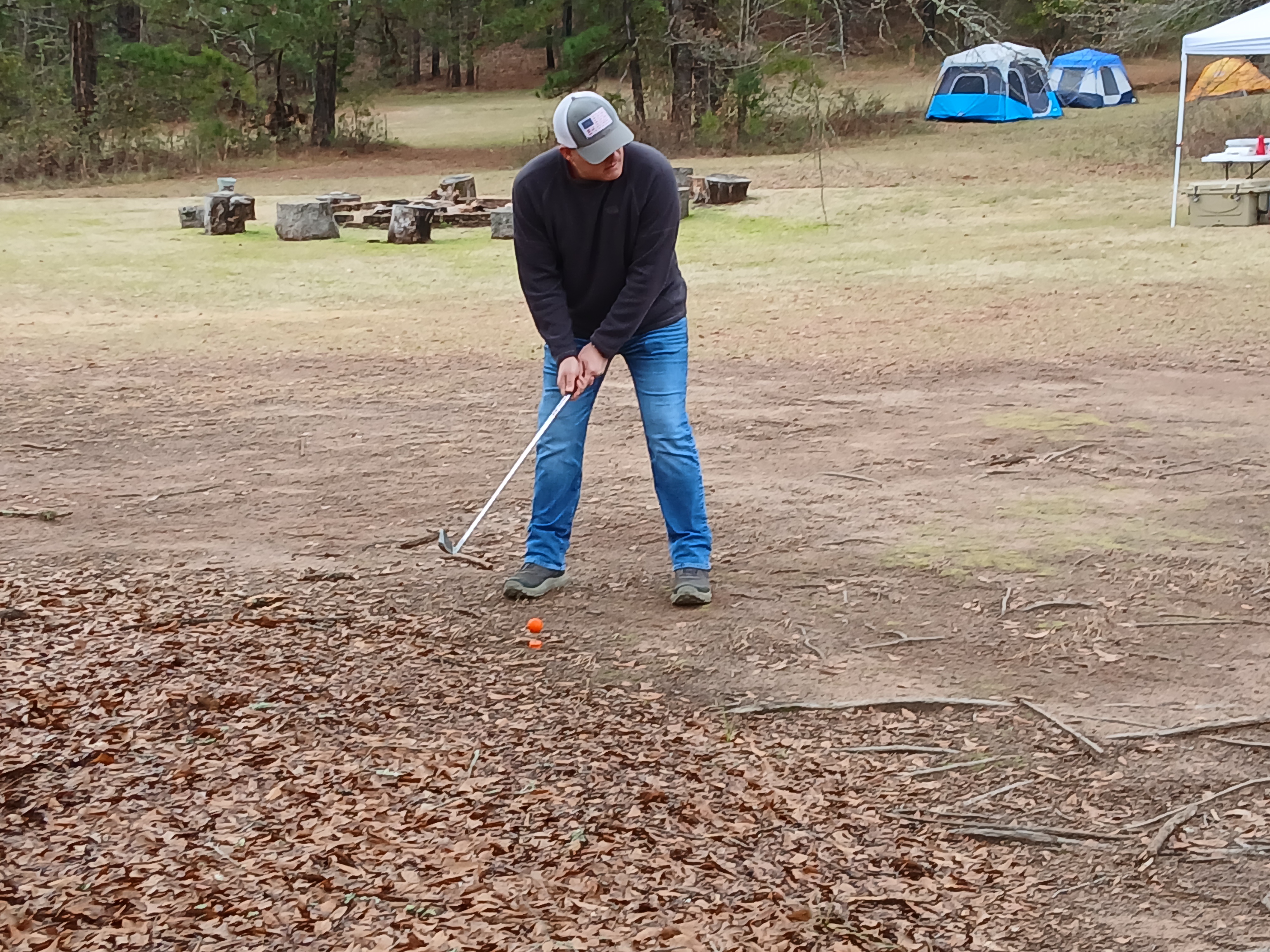
Tees - Regular golf tees of all lengths are desirable for forest and soft ground play. For firm ground, gravel, concrete and asphalt, there are alternate solutions. A single bottle cap ½-¾” can be used as a low tee; two bottle caps, one on top of the other can get you higher; and for maxheight, a wide bottle cap (gatorade size) with a hole in the middle to put a tee into can get you as high as you need.
Rules of Camp Golf:
1. Unless otherwise specified, the official rules of golf generally apply (usually to address an unexpected situation).
2. Only adults, 18 and up, are allowed to play, and scouts are not allowed to play with or handle clubs (unless serving as an officially designated caddy). In our troop we also allow special dispensation for a mature older scout - Eagle Scout or Junior Assistant Scoutmaster.
3. All shots may be teed up. Tees may be standard golf tees or bottle caps or combo tee/bottle caps (if you’re on concrete or hard-pan) - or whatever reasonable alternative tee material you may come up with.
4. All lies may be teed up within one foot of the original lie, no closer to the hole. In our troop we standardize to our Sasquatch Scoutmaster's shoe size.
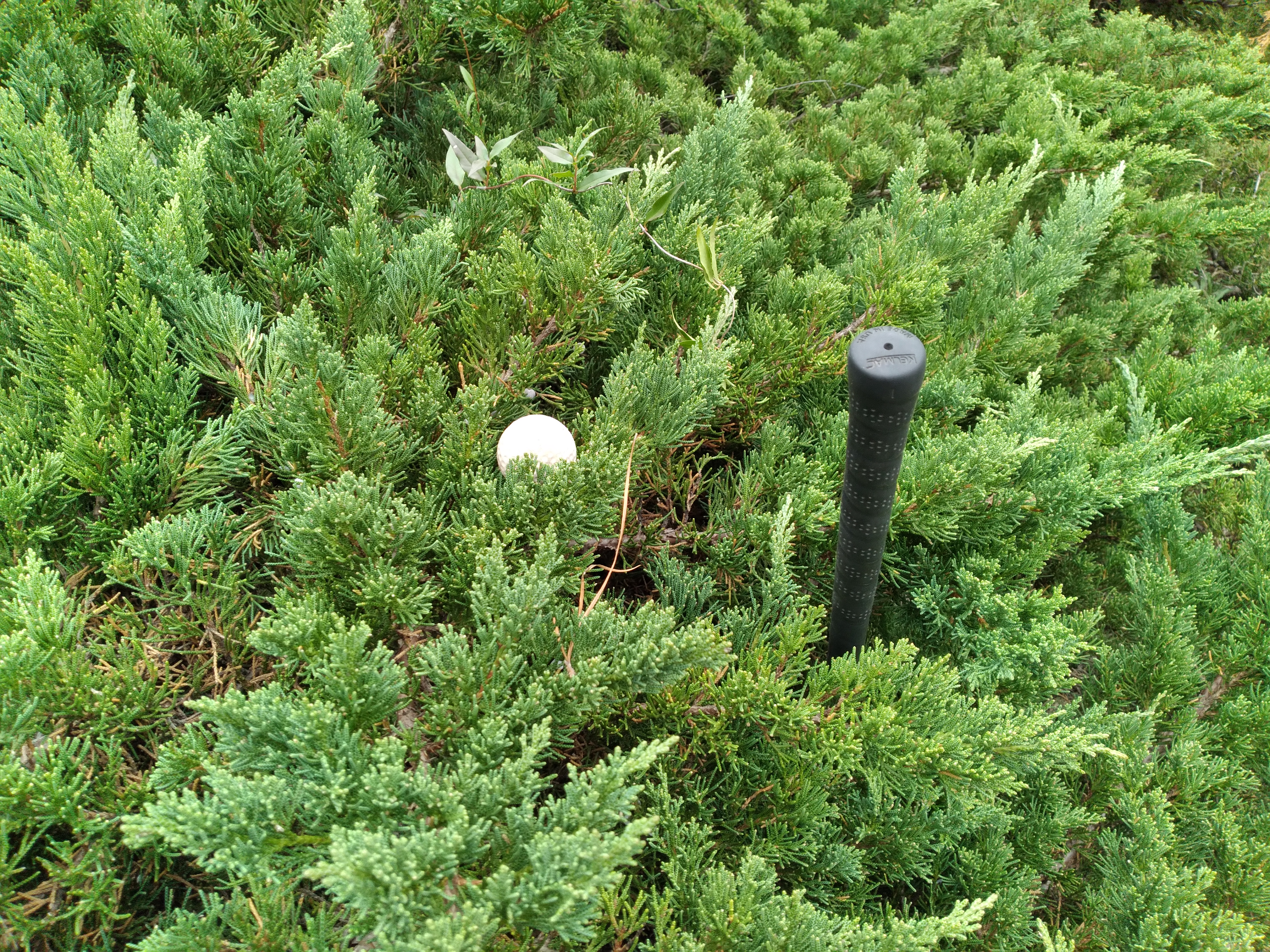
5. Lies may be adjusted vertically to any distance. (Example: your lie is next to a large log; you may raise your ball to the top of the log, within one foot, no closer to the hole. Example 2: You’re under a bush, but you can raise your ball to the top of the bush and set it on a branch/leaves and hit from there. Example 3: You’re stuck high in tree branches - you may place the ball (or a new ball if unrecoverable) on the ground directly below. Note: this rule may NOT be used to move the ball to the actual hole. (This note added as a result of my attempted implementation of the rule when my ball was under a platform that WAS the completion of the hole.)
6. There are no penalty areas; no Ground Under Repair; and no out of bounds (unless specified by the course designer or team consensus). However, if you deem your lie unplayable within allowable movement of the ball, you may take a "drop" within 10 feet, no closer to the hole, for a one stroke penalty (and you still get your 1 ft around that drop location (no need to actually drop the ball). Vehicles or other property must not be endangered by awkward club paths. If a ball cannot be safely hit within the one foot allowance, the 10 foot penalty drop becomes obligatory.
6.a. Loose impediments may, of course, be removed, as long as they are natural debris. However, troop and personal gear, along with campsite equipment and features, are considered part of the course (as situated at the start of the hole) and may not be moved to benefit players. Includes chairs, backpacks, totes, trashcans, etc.
7. If there is a dispute as to whether a ball is in or out of the hole, or some other questionable situation, the consensus of the other golfers will prevail. If tied, benefit to the golfer in question.
8. Scorekeeping must be logged at the end of each hole. Recommend one player maintain official scores, as confirmed by each player at the end of each hole. Maximum score on each hole: 10
9. Given the high probability of encountering cluttered areas and difficult swing paths, it is permissible to use the club handle as a “pool cue.” However, no other implements are to used in place of one of the standard clubs.
10. While addressing the ball: “whiffing” will not be counted as a stroke, as long as the ball does not move. If the ball moves, including knocking the tee out from under it, it counts as a stroke. Other inadvertant disturbance of the ball is also not penalized.
11. Hitting a scout during the course of a hole counts as a hole-in-one. However, a maximum of two strokes off is afforded so as not to negate a large score. So hitting a scout during your first, second, or third stroke will get you a score of 1 for the hole. Thereafter, subtract two from total score. Scouts must not be “trying” to get hit by going out of their way to be in the way, nor must golfers be actively “targeting” scouts. However, if scouts happen to be directly in line with the direction of play there is nothing wrong with attempting to hit them (experience shows that trying to hit the scouts instead of playing the hole generally results in a worse outcome!)
12. Hitting directly off gravel, asphalt, or concrete with full swings is forbidden. Gravel can become dangerous projectiles and these surfaces can destroy clubs. This can be remedied by adequate tee height and a relaxed swing.